
Kathy Floam-Greenspan
You can't do everything. You shouldn't do nothing. Start with what matters.
AI is everywhere. So is the advice about what your business needs to do to keep up.
Optimize for AEO. Don't forget GEO. Rethink your SEO. Create more content. Change your content. Fix your website. Get cited by AI.
Sound exhausting? (Heads nodding "yes.")
At HubSpot's UNBOUND 2026 conference in September, the POM Marketing team heard plenty about AI and its impact on B2B marketing. We were particularly interested in how AI search is changing the way companies get discovered online.
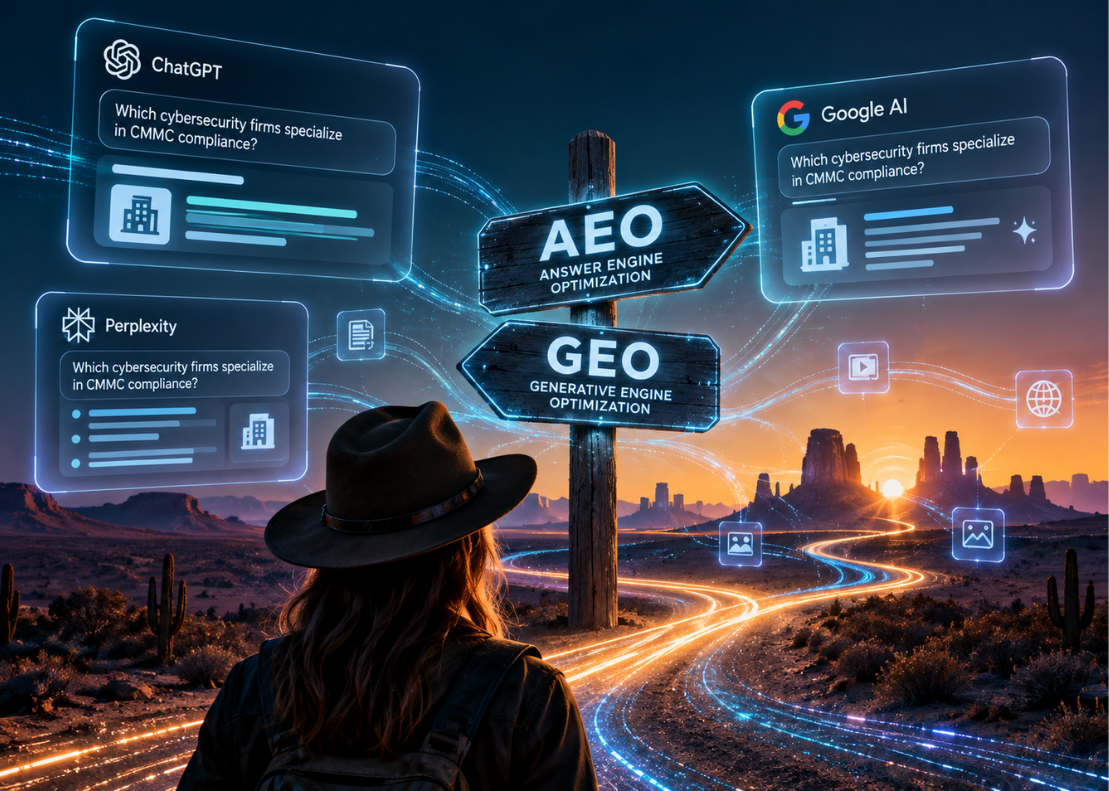
And here's what we learned: It's still the Wild West.
Experts have differing opinions about what works, what matters most, and how to measure success. Even the most enthusiastic AI adopters are still figuring things out.
At POM, we're senior-level B2B marketers who prefer practical strategies over chasing every shiny new tactic. We know our clients don't have unlimited time or budgets, and we believe marketing investments need to move the needle.
So, let's cut through the noise. What do B2B companies actually need to prioritize to build a strong foundation for AI search?
First, What the Heck Are AEO and GEO?
Traditional Search Engine Optimization (SEO) helps your website get found in search results.
Answer Engine Optimization (AEO) and Generative Engine Optimization (GEO) are about helping AI-powered tools like ChatGPT, Perplexity, and Google's AI search experiences understand, reference, and potentially recommend your company when buyers ask questions.
Think about it: Instead of searching for "cybersecurity companies," a buyer might ask AI, "Which cybersecurity firms specialize in CMMC compliance for small defense contractors?"
You want your company to be part of that answer.
The fundamental goal of AEO and GEO: Make it easier for AI to understand what you do, who you help, and why you're relevant.
Four Things Worth Prioritizing Right Now
Forget the endless AI optimization checklists. Here are four priorities worth your attention right now.
1. Get Your Website Messaging Right.
Your website is still your digital foundation. If it doesn't clearly communicate who you are, what you do, who you serve, and what makes you different, you're already at a disadvantage.
Vague claims like "innovative, industry-leading solutions" aren't doing you any favors.
The priority: Make your homepage, solutions pages, and industry content specific, relevant, and easy to understand. Clear messaging benefits both human buyers and AI search engines.
2. Answer the Questions Your Buyers Are Asking.
AI search is conversational. Buyers are asking increasingly specific questions about solutions, providers, capabilities, and industry challenges.
Your content should answer those questions, not just repeat your marketing messages.
The priority: Talk to your sales team. Identify the questions prospects ask most often. Then build useful content around those questions through blogs, FAQs, case studies, and solution pages.
More content isn't necessarily better. More relevant content is.
3. Get Your Digital Story Straight.
AI doesn't rely exclusively on your website to learn about your business. It can also draw from industry publications, social platforms, customer stories, and other credible sources.
If your digital presence tells five different stories about your company, that's a problem.
The priority: Make sure your messaging is consistent across your website, LinkedIn, industry directories, and other relevant channels. Look for opportunities to build credibility through third-party mentions, industry coverage, and customer success stories.
It's not just what you say about your company. It's what the rest of the internet says, too.
4. Measure What You Can. Don't Obsess Over What You Can't.
Here's something that came through loud and clear at UNBOUND: AI search measurement is still a work in progress.
You might already be getting leads from AI search without realizing it. And while traditional organic traffic may be declining, that doesn't necessarily mean your marketing is underperforming.
The priority: Start tracking AI referral traffic, testing how your company appears in AI-generated answers, and monitoring branded search, conversions, and lead quality.
You won't get perfect attribution. But you can establish a baseline, identify opportunities, and start making smarter decisions.
Already Showing Up in AI Search? Don't Get Too Comfortable.
If you're seeing AI-driven traffic or leads today, that's a great start. But as more B2B companies begin optimizing for AI search, the competition for visibility and recommendations will only intensify.
The goal is to move from accidentally getting discovered to intentionally building visibility.
And that means treating AI search optimization as an ongoing part of your marketing strategy, not a one-time website fix.
Less AI Hype. More Marketing That Moves the Needle.
Here's where we land: AI search is changing how B2B buyers discover and evaluate companies. The tactics will continue to evolve, but the fundamentals of effective marketing still matter.
You need clear positioning, credible content, a technically sound website, and a consistent digital presence. And you need a strategy that connects those elements without wasting time and budget chasing every new trend.
That's where POM makes the magic happen.
Our senior-level marketing team brings together brand strategy, website development, content marketing, SEO, and emerging AEO/GEO strategies to help B2B companies get found, build credibility, and drive growth.
As the way buyers search and discover businesses evolves, so does our approach. We're focused on making every marketing investment work harder, strengthening what works today while building visibility for what's next.
Ready to make your digital presence work harder in the age of AI? Let’s talk >